

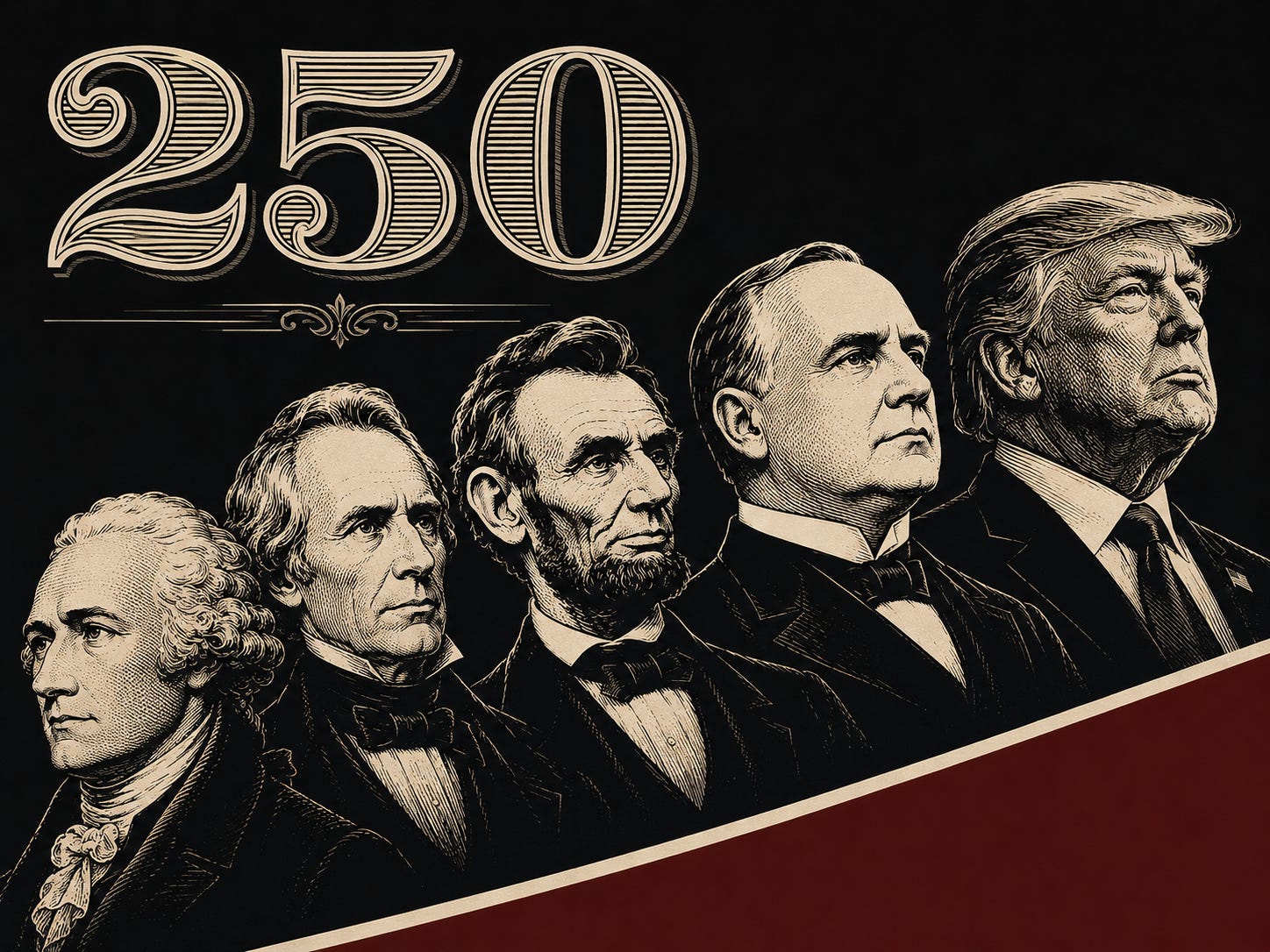
The first law ever passed by the Congress of the United States after the act prescribing the oath of office was a tariff.
The Tariff Act of July 4, 1789, signed into law on the thirteenth anniversary of the Declaration itself, announced its purpose in its opening line: the “encouragement and protection of manufactures.”
Before a Bill of Rights, before a judiciary, before a national bank, the Founders reached for the tariff: a clear demonstration of what they believed independence required.
They had learned the lesson the hard way. The American colonies began their life as export colonies for England. Jamestown survived only when it began growing tobacco as a cash crop for the English market. The richest families of early America were planters and the merchants, and they made their fortunes in the export trade.
But an export class is always dependent on the goodwill of the receiving market. A new tax, a shift in demand, the emergence of a rival supplier: any of these can turn a profitable export industry to total ruin. After more than a century as a dependent export colony, Americans had enough. The time had come for American resources to be spent in America. The time had come for Americans to manufacture their own products and set their own commercial policy.
The years under the Articles of Confederation drove the point home. Thirteen states, each setting its own commercial policy, were helpless against British trade discrimination after a hard-fought war for independence. The Constitution was, in no small part, the recognition that the states had to surrender commercial power to a national government capable of negotiating, retaliating, and protecting. Without the unified power to tariff, political independence would remain commercially hollow.
Madison saw the stakes clearly. In Federalist No. 10, he wrote that “the regulation of these various and interfering interests forms the principal task of modern legislation,” and he named the question directly: “Shall domestic manufactures be encouraged, and in what degree, by restrictions on foreign manufactures?” This clash over commerce constitutes the national debate over which interests to favor, and how to balance them.
This is not a footnote to statecraft. It is among the most important areas of political confrontation within any great state.
The tariff has stood at the forefront of American politics for 250 years because it is about far more than tax policy. It is the instrument by which a nation decides whether its future will be built at home or abandoned to others.
The historical record vindicates the protective view. Whatever the vulgar economists have insisted, the tariff guarded the nation’s independence across two and a half centuries, allowing American industry and American manufacturers to rise until the United States led the world. The men who built that consensus understood, in their own words, that the tariff and independence were one and the same.
Alexander Hamilton, Report on Manufactures, 1791:
“Not only the wealth, but the independence and security of a country, appear to be materially connected with the prosperity of manufactures.”
Henry Clay, In Defense of the American System, 1832:
“Gentlemen deceive themselves. It is not free trade that they are recommending to our acceptance. It is, in effect, the British colonial system that we are invited to adopt; and, if their policy prevail, it will lead, substantially, to the recolonization of these States, under the commercial dominion of Great Britain.”
Abraham Lincoln, letter to Dr. Edward Wallace, 1859:
“I was an old Henry Clay tariff whig. In old times I made more speeches on that subject, than on any other. I have not since changed my views.”
William McKinley, 1890:
“We lead all nations in agriculture; we lead all nations in mining; we lead all nations in manufacturing. These are the trophies which we bring after twenty-nine years of a protective tariff. Can any other system furnish such evidences of prosperity?”
Donald Trump, 2024:
“To me, the most beautiful word in the dictionary is ‘tariff.’”
After 250 years, the United States has not ceased to clash over commerce. Nor should it. But we have never ceased dedicating ourselves to the cause of independence, and the tariff remains the most fundamental means of securing it. History has proven, time and again, that national security and economic independence are inseparable.
So as we mark 250 years of American independence, let us fight for 250 more. Let us fight for a world where the decisions over our future do not depend on the industry of the Chinese Communist Party or any other competitor. Where the future of our children, and our children’s children, is decided within America, in institutions that champion freedom of speech, freedom of religion, life, liberty, and the pursuit of happiness. To protect what we hold dear, we must be economically secure. We must have the tariff.
A word from our friends
Bring America 250 in Your Home!
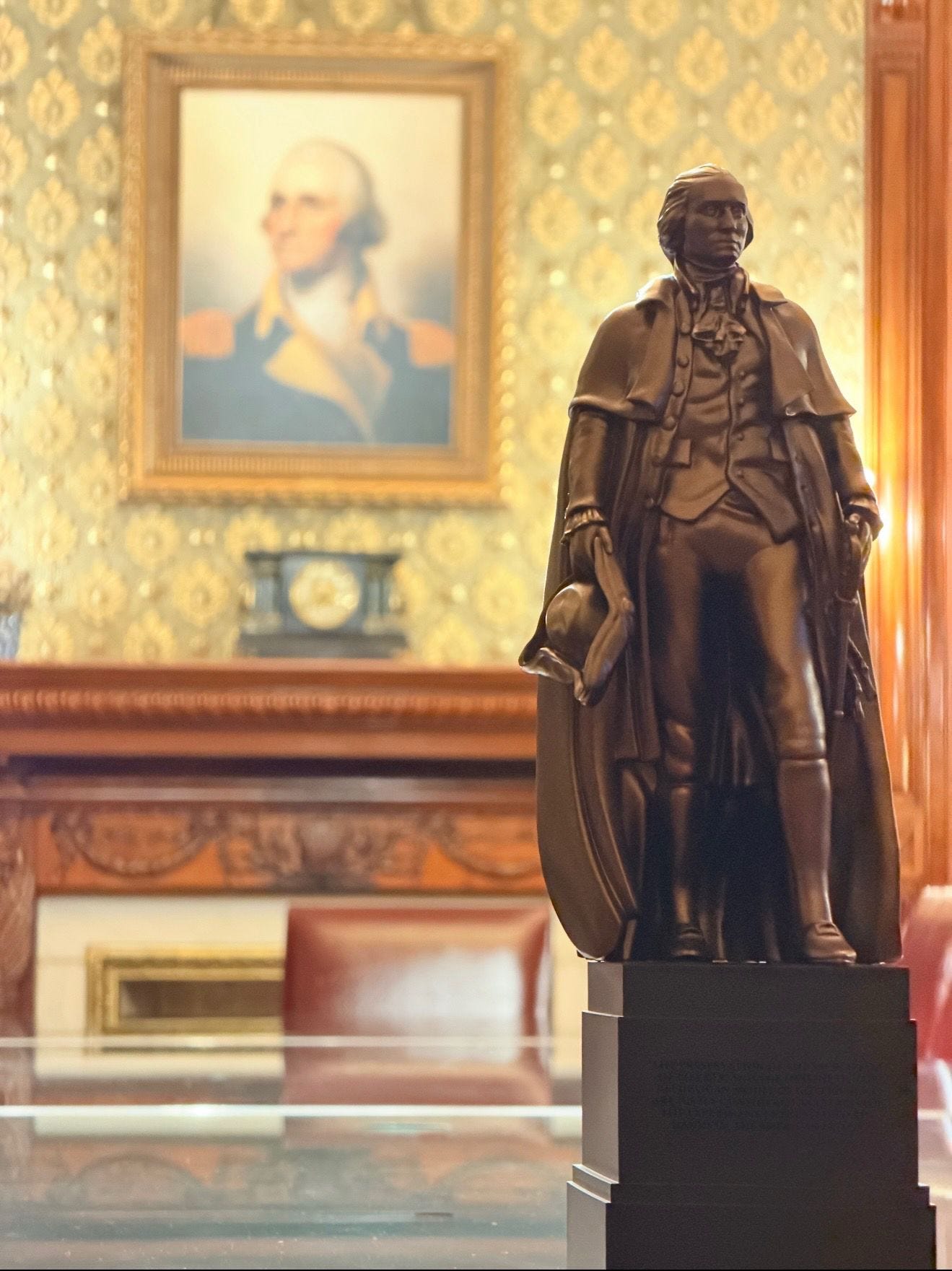
At his first inauguration, George Washington wore a suit of American-woven broadcloth — a deliberate declaration that the new republic would clothe, build, and supply itself. Two hundred fifty years later, More Monuments has captured that resolve in the Colossus of George Washington: a 16-inch model of the statue, the very same model that stands in the White House. Made in the USA, naturally.
For America’s 250th, the Colossus is $250 (regularly $300) — but only through July 5th. Use code TARIFF at checkout for free shipping!
Claim yours before the sale ends →
Every statue sold supports efforts to make monuments in America again.
Nearly every professing economist will tell you how bad tariffs are.
They’re wrong.
There are things that are more important than perfectible economic equations. A country, for instance.
Thanks for reminding us.
God bless America and everything she stands for! Thank you for this important article.