
Tariff Times Daily: Ag Secretary Rollins Looks to Fund Fertilizer with Tariffs
Fertilizer, rules of origin, pharmaceuticals, minerals development and a Philippine industrial corridor

THE BOTTOM LINE
Washington is moving on multiple fronts to translate tariff policy into tangible domestic capacity. Agriculture Secretary Rollins signaled that tariff revenue itself will fund a new fertilizer production initiative: a move that cuts against the old fiction that protection pits farmers against manufacturers. USTR Greer heads to Mexico next week to press on USMCA rules of origin, the Senate cleared a path for Minnesota mineral development, and the State Department launched a Philippines industrial corridor designed to diversify supply chains away from Chinese concentration. The common thread: bilateral leverage and domestic investment are displacing multilateral passivity as the operating model for U.S. economic policy.
TODAY’S STORIES
Rollins: Tariff Revenue to Fund U.S. Fertilizer Production Initiative
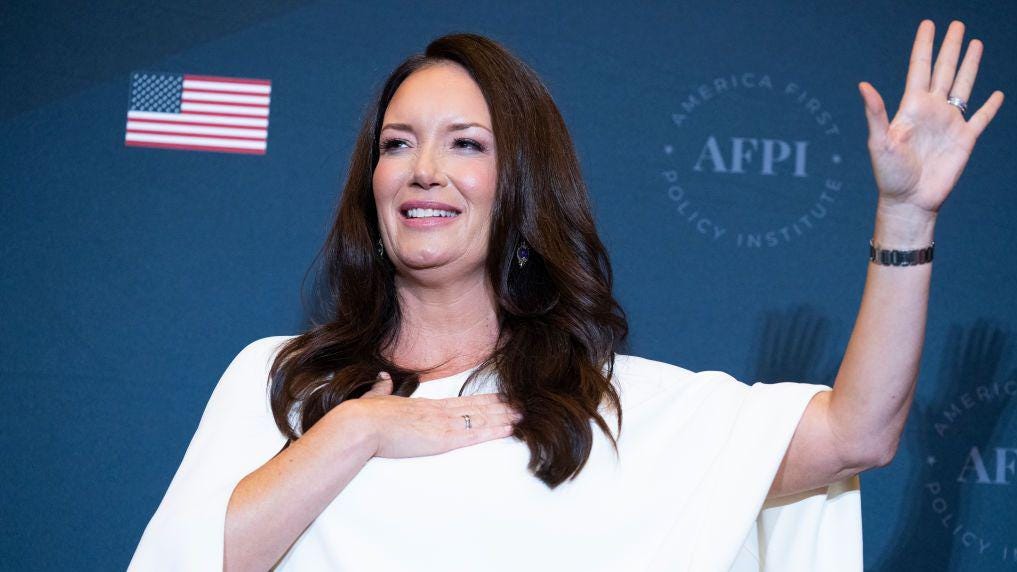
Agriculture Secretary Brooke Rollins told House appropriators that the administration is developing a plan, potentially announced next week, to direct tariff revenue toward bolstering domestic fertilizer production. The proposal quietly revives one of the oldest and most neglected truths of American political economy: the harmony of interests between the farmer and the manufacturer.
Henry C. Carey, Lincoln’s chief economic advisor, spent decades arguing the point. Southern cotton and tobacco planters, chained to the British export market, were not practicing agriculture so much as mining their soil — stripping nutrients and shipping them abroad with every bale and hogshead, never to be returned. Carey saw, drawing on the revolutionary soil chemistry of Justus von Liebig, that the farmer’s long-term interest was a domestic manufacturing base close at hand: one that returned nutrients to the land through proximate markets, industrial byproducts, and eventually a native fertilizer industry. Free trade, in Carey’s telling, was not the farmer’s friend but his slow ruin.
That framework is not a historical curiosity. When Lincoln signed the Organic Act creating the Department of Agriculture in May 1862, the protectionist Republican coalition built USDA explicitly to bring Liebig’s science to American soil — the first commissioner, Isaac Newton, was a Pennsylvania farmer from Carey’s own orbit, and the department’s first scientist, Charles Wetherill, had trained in Liebig’s laboratory. Scientific agriculture and protective tariffs were twin projects of the same political coalition, aimed at the same problem: a continent whose soils were being exhausted to pay for British manufactures.
Rollins’s proposal sits in this lineage. Fertilizer is a critical agricultural input where U.S. producers face significant import dependence, and using tariff proceeds to build out domestic capacity is a textbook application of the protective principle — the tariff funding the very industry it shields, and the manufacturer serving the farmer rather than competing with him.
Agri-Pulse
Greer Heads to Mexico Next Week for USMCA Rules of Origin Talks
USTR Jamieson Greer confirmed during his appropriations testimony that he will travel to Mexico next week to continue bilateral discussions with Economy Secretary Ebrard, with rules of origin as the central focus. Tightening origin requirements is the most direct mechanism for ensuring that USMCA preferences flow to producers who actually manufacture in North America rather than those routing goods through the region to claim preferential treatment. The visit follows bipartisan Senate pressure last week urging Greer to preserve USMCA’s framework while consulting Congress on the review process.
Inside Trade
U.S. and Philippines to Establish Industrial Hub in Luzon Economic Corridor
Under Secretary of State Jacob Helberg announced a 4,000-acre “economic security zone” in the Philippines, the first in a planned network of industrial hubs designed to build alternative supply chains, particularly for critical minerals, as part of his “Pax-Silicon” initiative. The corridor model reflects a bilateral, investment-led approach to supply chain security: rather than relying on multilateral frameworks to address concentration risk.
State Department
CPA Applauds FDA Proposal to Strengthen U.S. Generic Drug Manufacturing
The Coalition for a Prosperous America endorsed a new FDA proposal aimed at strengthening domestic generic drug manufacturing and supply chain integrity. Pharmaceutical production is among the sectors where import dependence poses both economic and national security concerns; the U.S. currently relies on overseas suppliers, particularly in Asia, for a substantial share of generic drug inputs. FDA action on manufacturing standards creates conditions that favor producers operating under U.S. quality and labor requirements.
Coalition for a Prosperous America (allied organization)
Senate Votes to Nullify Minnesota Land Withdrawal, Opening Acreage for Mineral Development
The Senate voted 50-49 to nullify a 2023 order that had withdrawn over 225,000 acres in Minnesota’s Superior National Forest from mineral development for 20 years. The resolution, advanced under the Congressional Review Act, opens land that contains significant deposits of copper, nickel, and cobalt. Domestic access to these minerals is a prerequisite for reducing reliance on foreign, and particularly Chinese-dominated, supply chains for inputs essential to manufacturing and defense.
Inside Trade
House China Panel: AI Export Control Gaps Leave Supply Chain Vulnerabilities
A new report from the House Select Committee on the CCP argues that U.S. export controls on advanced chips and AI capabilities are narrower in practice than commonly understood, with significant gaps that allow continued access by Chinese chipmakers. The report calls for closing loopholes in restrictions on chipmaking equipment and frontier AI tools. For industrial policy, the finding underscores that tariffs and trade restrictions require precise administration.
House Select Committee on the CCP
ON THE RADAR
House E&C subcommittee will hold a hearing next week on how the Clean Air Act and other environmental statutes affect critical mineral supply chains and domestic manufacturing capacity.
CRS published an updated brief on U.S.-Mexico trade relations, providing congressional background ahead of next week’s Greer visit and the broader USMCA review timeline.
Greer told appropriators USTR needs a $7 million budget increase to enforce commitments from recent bilateral deals, including non-discrimination protections for U.S. tech firms and China’s agricultural purchasing pledges.
Federal Reserve research circulating on Reddit suggests inflation would have returned to pre-pandemic levels without tariffs; the study is worth tracking as a data point that will feature in upcoming congressional testimony debates.
TODAY IN AMERICAN HISTORY
On April 17, 1790, Benjamin Franklin died in Philadelphia at the age of 84. Among his many contributions, Franklin was an early advocate for domestic manufacturing, arguing in his later years that American economic independence required productive capacity at home, not just political separation from Britain. His thinking laid groundwork for the protectionist tradition that Alexander Hamilton would formalize months later in his Report on Manufactures.
Tariff Times Daily is published by the American Protective Tariff League.