
Tariff Times Daily: CIT Hearings on De Minimis
Courts, Chinese autos, and the architecture of American industrial policy

THE BOTTOM LINE
The tariff regime’s legal architecture is being tested this week in ways that will matter well beyond the immediate cases. The administration’s argument for judicial deference on balance-of-payments determinations, if accepted, would provide durable constitutional grounding for a broad set of trade authorities; the CIT’s posture across Thursday and Friday hearings will signal how much running room the executive retains. Of particular importance is that the De Minimis loophole stays closed. Through De Minimis, billions of dollars of UFLPA violating goods have entered our country, and killed small business and handicrafts. Furthermore, the De Minimis loophole has been a major gateway for Fentanyl to pour into our country. Meanwhile, the bipartisan letter on Chinese autos is a reminder that the political foundation for protecting specific industrial sectors has the potential to run deeper than partisan lines. While the Republican Party for most of its history has been the champion of protectionism, support from the Democrats on this key issue is a welcome sight. The formation of the Marine Minerals Administration and the ongoing realignment of supply chains away from vulnerable concentrations reflect a broader pattern: the administration is building the institutional and resource infrastructure that a sustained American industrial policy requires.
TODAY’S STORIES
DOJ: Courts Must Defer to Presidential Findings in Section 122 Tariff Suit
The Justice Department told the Court of International Trade that judicial review of 10 percent Section 122 tariffs is limited to whether the president acted within delegated authority and followed proper procedure, not whether a “serious balance-of-payments deficit” actually exists. If the court accepts that reading, it would substantially insulate the administration’s economic determinations from substantive challenge and affirm the executive’s latitude to deploy trade authorities as a tool of industrial management.
Inside Trade
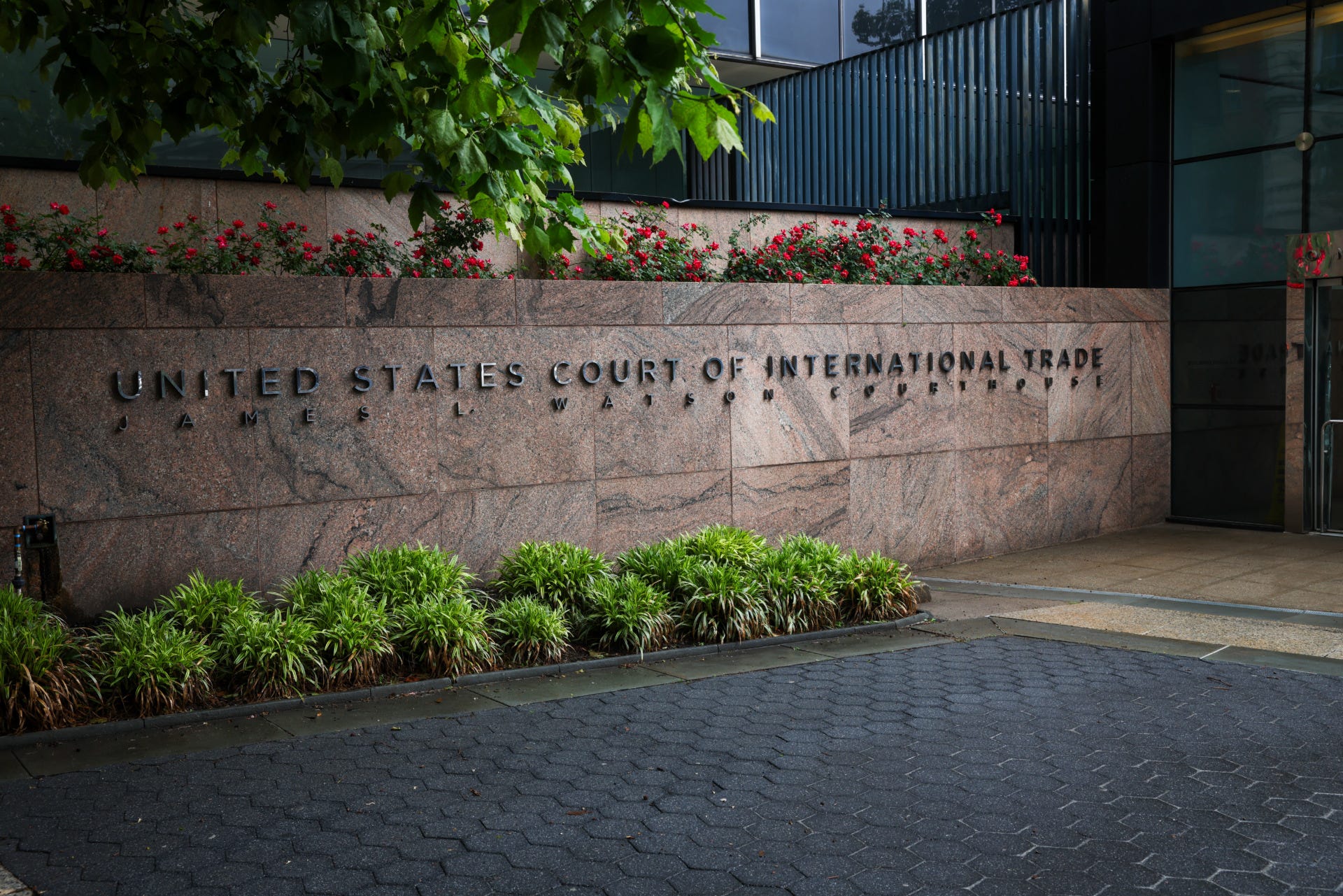
CIT to Hear Global Tariff and De Minimis Challenges This Week
A three-judge CIT panel will hear Democratic state attorneys general and private importers challenge the administration’s global 10 percent tariffs on Friday, preceded Thursday by arguments on the repeal of de minimis duty-free entry. Both proceedings carry precedential weight for how much deference courts extend to presidential trade determinations across the full range of current authorities. Important to note, that De Minimis has allowed hundreds of billions of dollars of goods into the United States that violate UFLPA laws.
Inside Trade
Senate Democrats to Trump: Close the Chinese Auto Backdoor
Senators Baldwin, Schumer, and Slotkin wrote to President Trump urging action to prevent Chinese vehicles manufactured or titled in Canada and Mexico from entering the U.S. market. The letter reflects a stable bipartisan understanding that domestic automotive production warrants protection against Chinese state-backed producers, regardless of broader disagreements on trade policy.
Inside Trade
India Trade Deal Unlikely to Yield Meaningful Agricultural Access
Richard Rossow of CSIS told Inside Trade that Prime Minister Modi will prioritize domestic political constraints in any U.S.-India agreement, making significant agricultural concessions unlikely. For American producers seeking market access, this is a useful signal: a bilateral deal with India will probably be weighted toward the sectors where India’s domestic politics are less sensitive, and expectations on agriculture should be calibrated accordingly. Often, American manufacturers have been traded away for agricultural market access, and chasing export markets is not the end all be all for protectionist trade policy. In that sense, this is a good sign.
Inside Trade
Interior to Consolidate Offshore Oil and Minerals Agencies
The Interior Department will merge the Bureau of Ocean Energy Management and the Bureau of Safety and Environmental Enforcement into a new Marine Minerals Administration, reversing a decade-old separation. The consolidation reflects the administration’s treatment of offshore resource development, including deep-sea minerals, as a unified strategic priority rather than a set of discrete regulatory functions.
Inside Trade
One Year In: Industries Still Absorbing Tariff-Driven Changes
CNBC reports that a range of industries continue to work through the effects of tariff-driven cost changes at the one-year mark, with supply chain realignment still incomplete across several sectors. Adjustment at this scale takes time; sourcing patterns built over decades do not resolve in a single year, and the friction that surfaces in the intermediate phase is distinct from the longer-term structural picture.
CNBC
ON THE RADAR
South Pars natural gas infrastructure reported attacked; energy price volatility is a secondary cost pressure for domestic manufacturing and worth monitoring. (r/PrepperIntel)
A Taiwanese EV manufacturer announced a $25M plant in the Philippines, illustrating how tariff and geopolitical pressure continues redirecting Asian industrial investment into Southeast Asia. (r/Philippines)
The IEA releases a new report on rare earth supply chain pathways Wednesday, with a public event tied to the release; relevant for anyone tracking critical minerals diversification policy. (Inside Trade / IEA)
WSJ examines whether century-high tariffs have produced measurable trade pattern shifts at one year, a useful data point for the ongoing policy record. (YouTube / WSJ)
Tariff Times Daily is published by the American Protective Tariff League.
Reminder that April 12th is Henry Clay day. We will continue to celebrate the life and legacy of Henry Clay leading up to his birthday on the 12th.
