
Tariff Times Daily: Deputy USTR Calls Out Canada on Political Malpractice
Switzer brands Carney's approach political malpractice as Greer meets Sheinbaum in Mexico; DOJ defends Section 232 derivatives calculation in court; Trump secures 17th MFN drug pricing deal with Regen

THE BOTTOM LINE
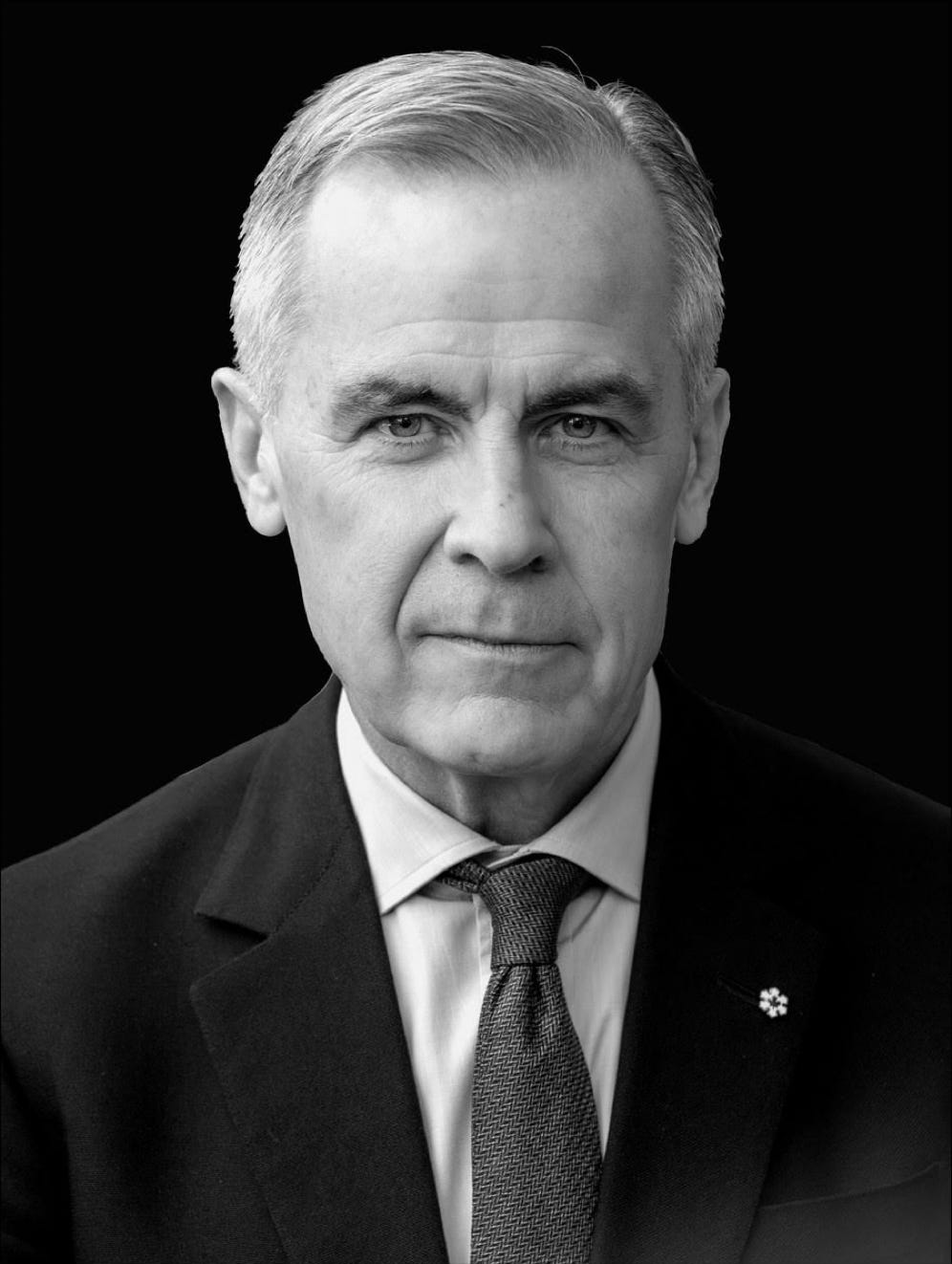
The USMCA was built on a shared commitment to keep forced-labor goods out of North American supply chains, and Canada is failing that commitment. Chinese forced labor goods continue to flood North American supply chains, and Ottawa has shown little appetite for the enforcement posture the agreement contemplates. When Washington moves to address the resulting circumvention, as it has through Section 232 derivatives and sustained pressure on Canadian practices, Prime Minister Carney's government responds by casting the United States as the aggressor and by letting provincial liquor bans sit as retaliatory theater. Deputy USTR Switzer was right to call this out as political malpractice this week. Meanwhile, the Justice Department's answer this week in Express Fasteners v. U.S. moves to defend the derivatives calculation methodology in federal court, protecting the enforcement architecture that keeps Xinjiang-tainted metal from laundering through third countries into American vehicles. The USMCA review is coming, and the administration is entering it with both the legal foundation and the moral high ground intact.
TODAY’S STORIES
DOJ Moves to Uphold Section 232 Derivatives Calculation
The Justice Department filed its formal answer to Express Fasteners v. U.S., arguing that the importer challenging the administration’s method of calculating Section 232 tariffs on steel and aluminum derivatives invoked the wrong statute and that most of the suit’s claims fail as a result. The outcome matters for the integrity of the derivatives duty architecture, which extends Section 232 protection into downstream steel and aluminum products and closes an avenue for circumvention through processing abroad.
Department of Justice
Deputy USTR Switzer Draws Public Contrast Between Mexico and Canada Ahead of USMCA Review
Deputy USTR Switzer described Prime Minister Carney’s approach to trade talks as “political malpractice” and noted that Ambassador Greer met with President Sheinbaum in Mexico on Monday, with no equivalent meeting on the Canadian side. The rhetorical differentiation previews a USMCA review in which Washington intends to reward cooperative partners and maintain pressure on those still posturing through retaliation, including the provincial liquor bans Carney indicated could be lifted if talks progress.
Inside Trade
House Foreign Affairs Advances a Dozen Export-Control Bills
The House Foreign Affairs Committee approved more than a dozen export-control measures, including the Multilateral Alignment of Technology Controls on Hardware Act and the Semiconductor Controls Effectiveness Act. Several of the bills would authorize BIS to apply extraterritorial controls on allies that decline to align with U.S. restrictions, an approach that tightens the technology-denial perimeter around China and reduces the leverage of partner-country foot-dragging.
House Foreign Affairs Committee
House Energy and Commerce Eyes TSCA and RCRA Reform to Unlock Critical Mineral Production
Subcommittee Chair Gary Palmer opened a review of the Toxic Substances Control Act and the Resource Conservation and Recovery Act, arguing that the two statutes impose regulatory burdens whose imposition coincided with China’s ascent in critical mineral supply chains. Any reform that shortens permitting timelines and reduces duplicative compliance costs would support the build-out of domestic processing capacity, which is the structural prerequisite for reducing dependence on Chinese refined inputs.
Inside Trade
Trump Announces 17th MFN Pharmaceutical Agreement with Regeneron; Senate Democrats Seek Disclosure
The President announced a most-favored-nation pricing agreement with Regeneron, the seventeenth company-specific deal tied to the April 2 presidential proclamation that granted tariff relief in exchange for price commitments. Senate Finance ranking member Wyden and seventeen other Democrats demanded the full terms be disclosed, arguing Congress needs to evaluate the tradeoffs between tariff leverage and pricing concessions.
White House
FEDERAL REGISTER WATCH
Notice — Commerce: Final affirmative determinations of sales at less than fair value for certain chassis and subassemblies from Mexico, Vietnam, and Thailand, with companion CVD affirmative determinations for Mexico and Thailand. The parallel findings across three source countries close a circumvention pathway for trailer and container chassis that had been displacing domestic producers. Mexico AD | Vietnam AD | Thailand AD
Notice — Commerce: Procedures for certain steel and aluminum producers committing to new U.S. production to obtain tariff adjustments under Proclamation 10984. The mechanism converts tariff leverage into an explicit incentive for greenfield domestic capacity in the medium- and heavy-duty vehicle and parts supply chain. Read notice
Notice — Commerce: Antidumping duty order on float glass products from China. The order completes agency action on a product category with direct relevance to domestic construction and automotive glass supply chains. Read notice
Notice — ITC: Preliminary-phase AD and CVD investigations instituted on Tris and Tris HCl from China. A successful petition would add another specialty chemical to the growing roster of AD/CVD-covered inputs and continues the pattern of moving enforcement into chemistries where domestic capacity is thin. Read notice
Notice — Commerce: Request for comment on subsidies provided by countries exporting softwood lumber to the United States under the Softwood Lumber Act of 2008. The 180-day reporting cycle is a standing mechanism for documenting Canadian stumpage subsidies and feeds directly into Section 201 and AD/CVD postures on lumber. Read notice
ON THE HILL
HEARINGS & MARKUPS
Apr 29 — House Natural Resources, Energy and Mineral Resources Subcommittee:“Powering the 21st Century with American Copper.” The hearing frames copper as foundational to grid, defense, and advanced manufacturing, and comes as the administration continues to weigh copper-specific trade measures. Committee page
BILLS TO WATCH
HR 8169 — Export Control Enforcement and Enhancement Act: Strengthens BIS enforcement authority. Consistent with the American System posture of using export controls to preserve domestic technology advantages. Ordered reported by House Foreign Affairs, 44-0, April 22. View bill
HR 8287 — Semiconductor Controls Effectiveness Act of 2026: Tightens semiconductor-specific controls, a direct complement to the CHIPS production agenda. Ordered reported, 43-0, April 22. View bill
HR 6322 — Stop Stealing Our Chips Act: Raises the cost of diversion of U.S. semiconductor technology. An enforcement-side addition to the technology-denial perimeter. Ordered reported, 43-1, April 22. View bill
HR 5853: Raises civil penalties under the Export Control Reform Act. Meaningful deterrence requires penalties that scale with the commercial value of the restricted technology. Ordered reported, 44-0, April 22. View bill
HR 8036 — Interagency Coordination in Export Controls Act: Formalizes coordination across agencies on export-control decisions, a structural fix that should reduce the seams diversion operations exploit. Ordered reported, 25-19, April 22. View bill
COMMITTEE STATEMENTS
W&M Chairman Smith: In his Wednesday opening statement at the Greer hearing, Chairman Smith framed the administration’s tariff strategy as a tool to break down foreign barriers to American producers. This framing overemphasizes the value of opening up export markets, and practically concedes that the apparent goal of tariffs is to negotiate and leverage for more free trade. This is absolutely wrong. While President Trump is earning Americans export markets and securing supply chains critical to national security that can not be sourced domestically, the goal of tariffs is the collection of revenue and tariffs. Mealy-mouthed sentiments that frame the Presidents tariff action as a move toward fairer free trade abandon the principles that Made America Great and that will Make America Great Again. Read statement
TODAY IN AMERICAN HISTORY
On April 24, 1824, James Madison wrote from Montpelier to Speaker Henry Clay thanking him for a copy of his "Speech in Support of an American System for the Protection of American Industry," the two-day oration delivered from the House floor less than a month earlier. Madison, still the living father of the Constitution, praised Clay's "ability & eloquence" even as he candidly dissented from the scope of the pending tariff bill. The exchange captures a founding-era truth worth recovering: the question was never whether the federal government could protect American industry, but how far and by what prudential measure.
Tariff Times Daily is published by the American Protective Tariff League.
READ NEXT:
The American Who Helped Build Modern Japan
·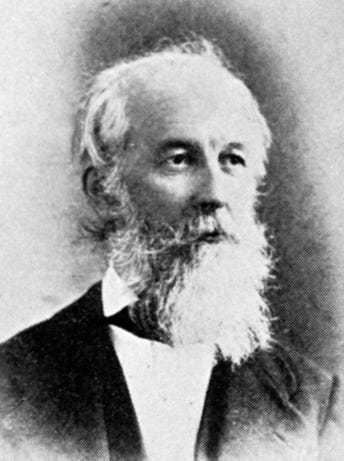
Something unusual has been happening on Twitter lately. Americans and Japanese are finding each other, talking to each other, celebrating each other’s cultures across the language barrier with nothing but an autotranslation feature and genuine goodwill. It is a small thing, perhaps. But it points toward something real: a friendship between two nations t…
