
Tariff Times Daily: High Tariff Revenues Cause CBO to Recallibrate
Commerce issues preliminary antidumping findings; USTR opens formal AGOA modernization docket ahead of reauthorization; CBO recalibrates revenue rules to reflect tariffs

THE BOTTOM LINE
Today we see huge affirmation that President Trumps administration continues to see success. First, we saw Commerce with a huge win by moving toward a preliminary affirmative dumping determinations against solar cells from India, Indonesia, and Laos, advancing the supply-chain case the Coalition for a Prosperous America has been pressing toward a polysilicon Section 232. CBO meanwhile recalibrated its revenue projections to account for the higher marginal tariff rate now baked into federal receipts, which strengthens the protectionist case for using tariff revenue as a structural fiscal building block, and shows that the Congress is beginning to see the value in tariffs. Also, USTR has opened a formal docket inviting comments on how to shape AGOA in a way that would conform with the needs of manufacturers and the public as well as the Presidents trade agenda.
TODAY’S STORIES
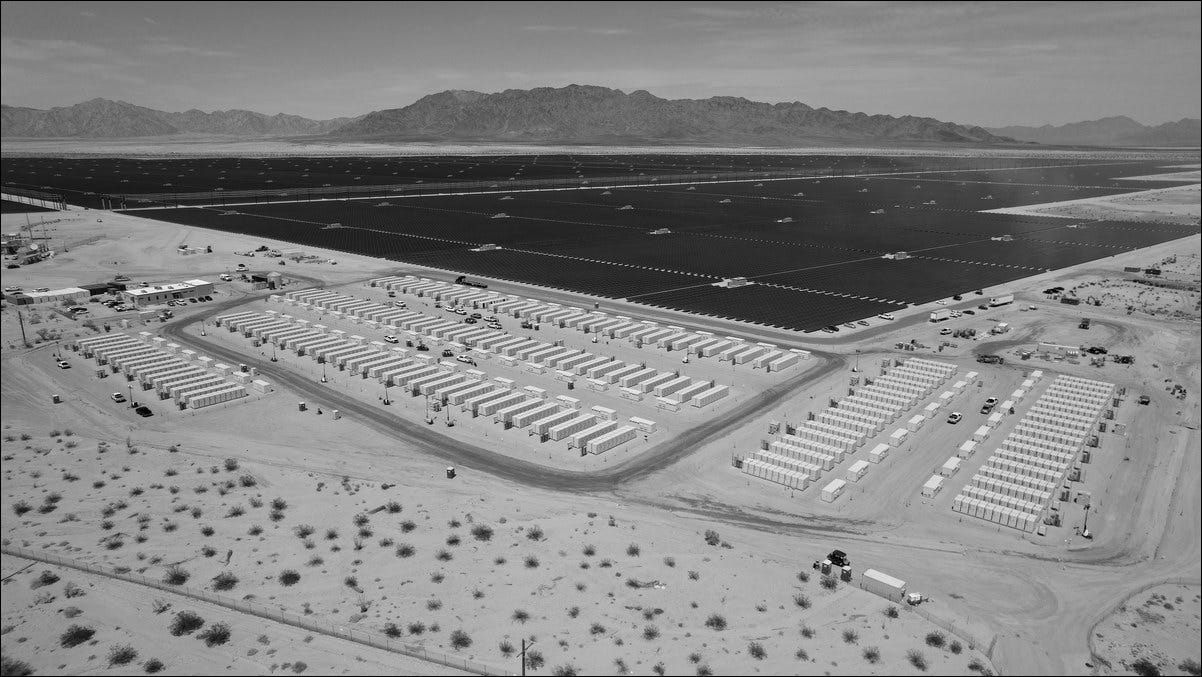
Commerce Issues Preliminary Antidumping Determinations on Solar Cells from India, Indonesia, and Laos
The Department of Commerce on Monday issued preliminary affirmative determinations that crystalline silicon photovoltaic cells from India, Indonesia, and the Lao People’s Democratic Republic are being sold in the United States at less than fair value, with critical-circumstances findings in part. Taken together, the three actions move forward the broader effort to close the circumvention paths that have undercut domestic solar manufacturing. CPA has urged the administration to extend the same logic upstream through a Section 232 case on polysilicon, the missing link in a fully domestic solar supply chain.
Federal Register / Department of Commerce
USTR Opens AGOA Modernization Docket, Comments Due May 15
USTR published a Federal Register notice inviting comments on how to modernize the African Growth and Opportunity Act in line with the administration’s trade approach. Greer told Ways and Means last week that AGOA reform sits at the top of the agenda, and the formal docket now puts that intent on a defined timetable. The opening signals that future preference programs will be calibrated to American worker and producer interests rather than legacy assumptions about open access. It is critical in this moment that Protectionist minded members of manufacturing organizations and the public share their thoughts to calibrate the future of AGOA in a way that nullifies its dangerous qualities. While open trade with Africa can be harmful both for the United States and Africa, the free import of certain raw goods from Africa remains important to U.S business and strategic needs.
USTR
CBO Adjusts Revenue Rules of Thumb to Reflect Higher Tariff Receipts
The Congressional Budget Office has updated its revenue and deficit projection rules to incorporate the higher marginal tariff rate established through executive action during the first year of the new Trump administration. CBO notes that with tariffs at a higher base, federal revenue is now more sensitive to economy-wide factors such as inflation and labor productivity. The recalibration confirms that tariff revenue has moved from a marginal line item to a structural feature of the federal balance sheet, supporting the case CPA has been making that tariffs can serve as a credible budget pay-for.
Congressional Budget Office
CBP Reports Tariff Refund System Processing 75,000 Claims in First Week
In its first overview to the Court of International Trade, U.S. Customs and Border Protection reported that its post-judgment refund system has received more than 75,000 claims covering over 10 million shipments, of which roughly 1.74 million have been liquidated.
Inside Trade
CPA: AI Hearing Highlights Chinese Industrial Capacity, Not Just Model Theft
The Coalition for a Prosperous America covered a recent congressional hearing in which lawmakers framed the conversation around China stealing American AI models, while expert witnesses redirected attention to the larger question of Chinese industrial capacity in semiconductors and AI hardware. The piece argues that the practical risk lies less in stolen models than in the productive base that gives China the ability to deploy AI at scale. For the American System, the implication is that protection must extend across the hardware stack, not merely the algorithms.
Coalition for a Prosperous America
FEDERAL REGISTER WATCH
Notice: Commerce published technical corrections to the Harmonized Tariff Schedule implementing Presidential Proclamation 11021 on aluminum, steel, and copper. Routine maintenance of the Section 232 metals architecture, but it confirms the administration is keeping the schedule current as derivatives and product-coverage updates flow through. Read notice
Notice: Commerce issued a final antidumping duty order on steel concrete reinforcing bar from Algeria following affirmative final determinations by Commerce and the ITC. Another country added to the rebar AD discipline; domestic rebar producers gain protection against an emerging source of unfairly priced supply. Read notice
Notice: Commerce initiated less-than-fair-value investigations on oil country tubular goods from Austria, Taiwan, and the United Arab Emirates, alongside a parallel CVD investigation on Austrian OCTG. Three new fronts opened against unfairly priced energy-sector pipe; OCTG producers in Texas, Ohio, and the Gulf states should track the preliminary timetable closely. LTFV initiation | Austria CVD initiation
Notice: Commerce determined that seamless OCTG produced in Thailand using Chinese steel billets is within the scope of the China AD/CVD orders. The covered-merchandise determination closes a transshipment route that had allowed Chinese steel content to reach U.S. customers under Thai cover. Read notice
Notice: Commerce issued a parallel covered-merchandise determination on certain chassis and subassemblies from China, finding specific imports within scope of existing AD/CVD orders. Closes another evasion vector for the chassis order, which the domestic chassis industry has been pressing to keep watertight. Read notice
ON THE DOCKET
Sunset-review week; six ITC five-year reviews on Chinese-origin orders close Friday, with the new AGOA modernization docket opening behind them.
May 1, ITC (closes in 2 days): Five-year sunset reviews on six Chinese-origin AD/CVD orders covering prestressed concrete steel wire strand, mattresses (China plus Cambodia, Malaysia, Serbia, Thailand, Turkey, and Vietnam), small vertical shaft engines, boltless steel shelving, non-refillable steel cylinders, and chassis and subassemblies. These reviews determine whether the orders remain in place for another five years; domestic producers and trade associations who do not file responses risk seeing the orders revoked. Wire strand | Mattresses | Small vertical shaft engines | Boltless steel shelving | Non-refillable steel cylinders | Chassis and subassemblies
May 15, USTR (new, closes in 16 days): Comments on the modernization of the African Growth and Opportunity Act. USTR will use the input to inform recommendations to Congress on AGOA reauthorization; domestic industry, labor, and policy commenters can shape how preferences are conditioned on labor standards, rules of origin, and reciprocity. Read notice
ON THE HILL
HEARINGS & MARKUPS
Apr 29 (today), House Ways and Means: Full committee markup of HR 7432, HR 7463, HR 7343, HR 7529, HR 7655, and HR 7995. Bill titles were not included in the published notice; the markup falls within the committee’s full jurisdiction, which includes trade and tariff matters.
BILLS TO WATCH
HR 4930: Expanded sharing of information on suspected intellectual-property-rights violations in trade. Strengthens the enforcement architecture against pirated and counterfeit goods that displace American producers. The motion to reconsider was laid on the table without objection on Apr 27, indicating House passage. View bill
HR 8556: Improved DOD oversight of compliance with domestic food supply chain requirements. Reinforces the federal interest in keeping defense food procurement inside U.S. borders, an applied case of the broader buy-American principle. Referred to House Armed Services on Apr 28. View bill
HR 8471: Tariff Act amendment prohibiting the importation of nonhuman primates. Narrow in subject but worth tracking as a continued use of Tariff Act authority for adjacent ends; sets precedents for using customs statutes beyond pure trade-policy purposes. Referred to Ways and Means on Apr 23. View bill
COMMITTEE STATEMENTS
No new W&M trade statements in the last 72 hours.
TODAY IN AMERICAN HISTORY
On April 29, 1862, Federal forces under Admiral David Farragut completed the capture of New Orleans, severing the Confederacy’s largest port and reshaping American cotton commerce for the duration of the war. If you visit Washington D.C, you will immediately recognize that Farragut park and the Farragut North and West Metro stops are named after him.
Support by subscribing.
READ NEXT:
The President Who Finished Lincoln's Economic Program.

Two months into Ulysses S. Grant’s first term, the last spike went into the Pacific Railway at Promontory Summit. The new German chancellor sent a representative to his inauguration. Within a year, his attorney general would suspend habeas corpus in nine South Carolina counties to break the Klan,
This article has been going VERY viral recently!