
Tariff Times Daily: Tariff Refunds as Political Theatre
Your Daily Tariff Update for April 6th, 2026 covers the top stories in trade and tariffs.

THE BOTTOM LINE
The administration is building out the institutional and legal architecture to make its trade posture durable. A budget that funds enforcement, a legislative push to align allied technology controls, expanded domestic mineral acreage, and the 100% Pharma tariff represent the interlocking pieces of a coherent industrial strategy. But pushback from Democrats is growing, with Gov. Whitmer joining Gov. Pritzker in weaponizing tariff refunds. The first-year record on manufacturing investment has been uneven, but the policy framework is becoming more complete; the question now is whether the capital decisions that framework is designed to produce are beginning to accelerate at the scale the strategy requires. It is worth repeating the importance of the Congress in ensuring the framework the President has built will be cemented into law.
TODAY’S STORIES
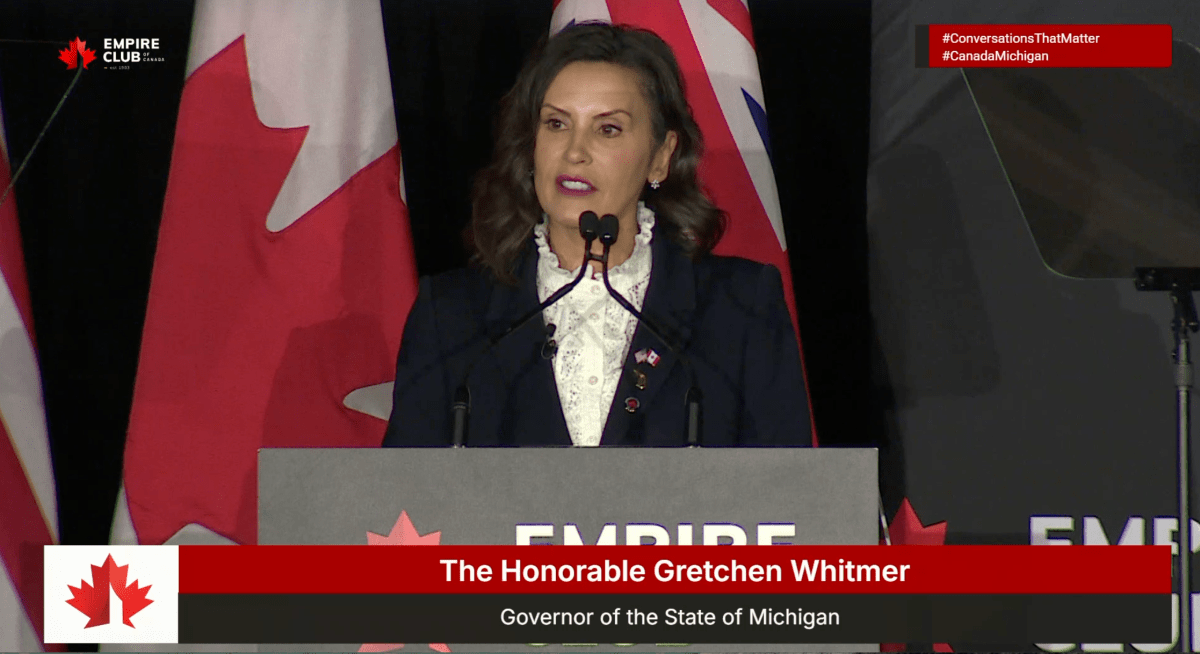
Michigan vs. Washington: The Tariff Refund Fight
Michigan Gov. Whitmer issued an order directing state agencies to study tariff impacts and encourage refund applications. This move puts manufacturing-state Democratic pressure on the trade agenda at exactly the moment USMCA's 2026 review is approaching. Michigan is a state that has particularly suffered from free trade and deindustrialization. Yet the Democratic governor is opposing tariffs in a likely effort to boost her upcoming Presidential campaign. It’s worth watching whether other Democratic presidential candidates will come out in favor of the tariffs or campaign strongly against the Presidents agenda.
FY27 Budget Concentrates Trade Enforcement Resources
The Trump administration’s fiscal year 2027 budget request would increase funding for the Commerce Department’s International Trade Administration and Bureau of Industry and Security, directing new resources toward enforcement work while proposing cuts for offices the White House says have drifted from their original missions. Trade policy as an active instrument of industrial development requires institutions that can back it up, and this budget reflects that understanding. Congressional appropriators hold final authority, but the priorities continue to signal a durable administrative commitment.
Inside Trade
EU’s Lange Reads Steel Tariff Revision as Progress on Turnberry
European Parliament International Trade Committee Chair Bernd Lange said Friday that the U.S. decision to scale back Section 232 duties on certain steel and aluminum goods is a “welcome first step” toward fulfilling the Turnberry framework commitments. The EU-U.S. bilateral relationship has moved unevenly since Turnberry, and the steel adjustment appears to be providing forward momentum where stasis had been the recent norm. Stable, predictable access arrangements with a partner of the EU’s scale carry real value for American producers navigating European markets.
Inside Trade
BLM Moves to Open New Mexico’s Pecos Watershed to Mineral Leasing
The Bureau of Land Management and the Forest Service will cancel protections on more than 164,000 acres of the Upper Pecos River Watershed in northern New Mexico, opening the land to mining and mineral leasing under a draft Federal Register notice. The decision extends a pattern of federal land policy adjustments intended to expand domestic access to critical materials. Supply-side development is the necessary complement to the diplomatic and investment work underway on critical minerals; opening viable domestic acreage makes the broader strategy more coherent.
Inside Trade
Bill Would Require Allies to Match U.S. Chip Equipment Export Controls
House and Senate lawmakers have introduced the Multilateral Alignment of Technology Controls on Hardware Act, directing the U.S. to press allied countries to align their semiconductor manufacturing equipment export controls with American restrictions, with the threat of extraterritorial enforcement via a foreign direct product rule if they do not. The bill addresses a structural gap: unilateral controls on advanced chip equipment lose effectiveness when allied manufacturers continue to supply what U.S. exporters cannot. Bringing the coalition into alignment on technology controls is both an industrial priority and a matter of strategic coherence.
Inside Trade
ON THE RADAR
WSJ: “Trump Used Century-High Tariffs to Reshape Trade. Is It Paying Off?” — a measured one-year assessment worth reading for its data on where investment and reshoring stand.
Lex Fridman / Keyu Jin: A long-form conversation on China’s economy, tariffs, and U.S.-China trade dynamics; useful for understanding the structural arguments on the other side of the bilateral relationship.
Reddit / r/InterstellarKinetics: An AI-designed rust-proof, 3D-printable steel alloy is drawing attention; early stage, but the convergence of advanced materials science and domestic manufacturing capability is a development worth tracking.
r/stocks: Iran-related uncertainty continuing to weigh on markets; energy price volatility carries downstream effects on manufacturing input costs across multiple domestic sectors.
READ NEXT:
One Year Later: Liberation Day and the Work Congress Has Yet to Do

A year ago today, on April 2, 2025, Donald Trump stood in the Rose Garden and did something no president had dared to do in nearly a century.
Henry Clay’s Unfinished Revolution

On July 6, 1852, Abraham Lincoln rose to eulogize a man he had called his “beau ideal” of a statesman.The young Illinois congressman who would one day save the republic stood before a Springfield crowd and reached for language adequate to express the loss of a man he had come to model in thought, word, and deed.
Tariff Times Daily is published by the American Protective Tariff League.